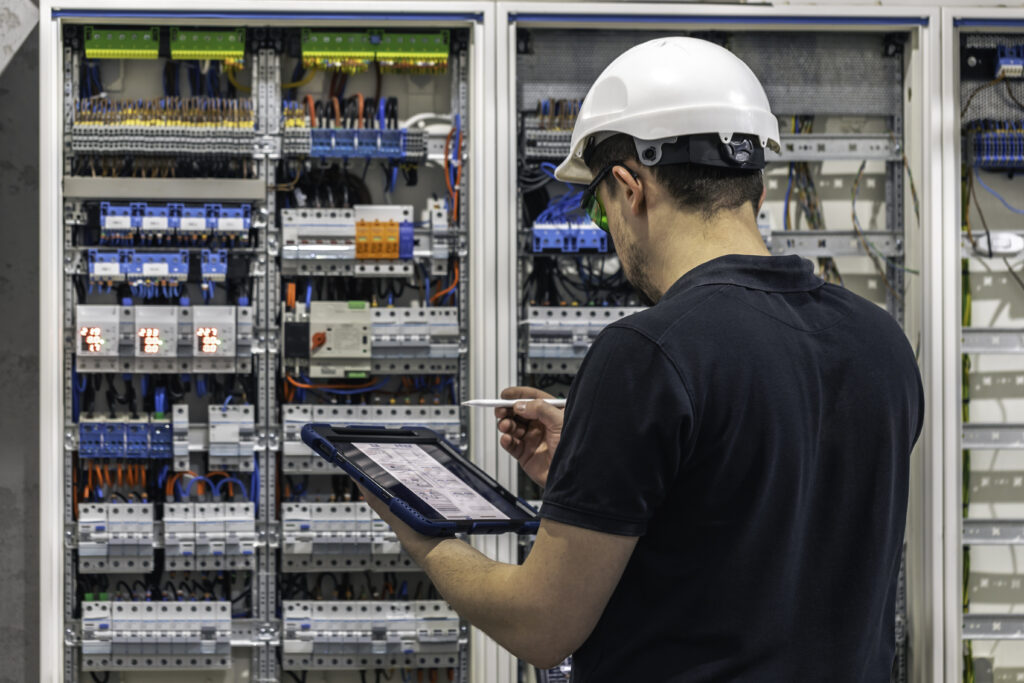
Man, an electrical technician working in a switchboard with fuses. Installation and connection of electrical equipment. Professional uses a tablet. SSUCv3H4sIAAAAAAAACpySwW7DIAyG75P2DhHnVmoDZM1epdrBIW6DSqEC0mmq+u4zkFTsuksUf7Z/+4/zeH9rGjZA0Ip9No8UUayNmUP0ELWzhHebhXu0I/qa3D3vdjUAXUc46ui8BlPDAaKaLFyRoJ2NSfiZkyxEiHPAkHZZkIKIZ9Io8CVRFj6WuFkTOUkdlGJsU7EwD5mtqIj/q7O8fL0Mn9Gqn7xwZcSjQShGjqWUXb4j+mttDeZRu8rV3SkwqYBXSqBv4OFP381rpe25Ii5O+S6rknKzjT5t9TLDjHM3GEz66icagyufIAQqH1dezVb0F7hrNce6mD0tqmyk46Rwz7kUh1a0gou+k2IvloJy0EmTTl5nFaJYXfRYu9JpAybkoVVDf9rupDxsBXZ826tO0ANlK3su8GOgWzx/AQAA//8DAMVTnMq5AgAA
The Foundation of Modern Industry
Safe and reliable industrial electrical systems form the backbone of modern manufacturing plants, processing facilities, warehouses, and heavy industries. From powering complex machinery to supporting lighting, automation, and communication networks, these systems ensure that operations run smoothly and efficiently. Without a dependable electrical infrastructure, production delays, equipment damage, and safety risks can quickly disrupt even the most advanced industrial environments. Regular inspections and documentation, such as obtaining an EICR Certificate, help verify that electrical installations meet safety standards and continue operating reliably in demanding industrial settings.
Industrial facilities depend on carefully engineered electrical systems designed to handle high loads, fluctuating demand, and harsh operating conditions. Unlike residential or small commercial systems, industrial electrical networks must support large motors, control panels, transformers, and backup systems. A well-designed setup not only delivers consistent power but also protects workers and equipment from electrical hazards. By prioritizing safety and reliability from the start, businesses can avoid costly downtime and maintain steady productivity.
Core Components and System Design
The effectiveness of Electrical Contact Kits for Industrial Contactors begins with proper design and high-quality components. Key elements include switchgear, circuit breakers, transformers, motor control centers, distribution panels, and grounding systems. Each component plays a critical role in distributing power safely across the facility while preventing overloads and short circuits. Engineers must calculate load requirements accurately to ensure that every piece of equipment receives stable and sufficient power.
Proper system design also includes redundancy and backup planning. Many industrial facilities incorporate uninterruptible power supplies (UPS) and standby generators to maintain operations during power outages. Clear labeling, organized cable management, and accessible control panels improve both efficiency and safety. By integrating modern monitoring systems, operators can track voltage levels, detect irregularities, and respond quickly to potential issues before they escalate into serious failures.
Safety Standards and Regulatory Compliance
Safety is the most critical aspect of industrial electrical systems. High-voltage equipment and heavy machinery present significant risks, including electric shock, arc flashes, and fire hazards. To minimize these dangers, facilities must comply with national and international electrical safety standards. Organizations such as the National Fire Protection Association publish guidelines like the National Electrical Code (NEC), which outlines best practices for safe installation and maintenance.
In addition, workplace safety regulations enforced by entities like the Occupational Safety and Health Administration require employers to provide proper training, protective equipment, and hazard assessments. Regular inspections, thermal imaging tests, and preventive maintenance checks help identify worn components and potential risks. Compliance is not just about meeting legal requirements; it demonstrates a commitment to employee safety and operational excellence. When safety protocols are consistently applied, the likelihood of accidents and unexpected shutdowns decreases significantly.
Maintenance Strategies for Long Term Reliability
Even the most advanced electrical system can fail without consistent maintenance. Preventive and predictive maintenance strategies are essential for preserving safe and reliable industrial electrical systems. Preventive maintenance involves scheduled inspections, cleaning, tightening connections, and replacing aging components before they break down. This proactive approach reduces the risk of sudden equipment failure and extends the life of critical infrastructure.
Predictive maintenance goes a step further by using data and monitoring technologies to anticipate problems. Tools such as infrared thermography, vibration analysis, and power quality monitoring detect abnormal patterns that signal potential faults. By addressing minor issues early, companies can prevent major disruptions and expensive repairs. Detailed documentation of maintenance activities also ensures accountability and provides valuable insights for continuous improvement. Over time, a disciplined maintenance program strengthens both system reliability and overall operational performance.
The Role of Technology and Skilled Professionals
Advancements in technology continue to enhance the safety and dependability of industrial electrical systems. Smart sensors, automation software, and integrated control systems allow facility managers to monitor performance in real time. Automated shutdown mechanisms can isolate faulty circuits instantly, minimizing damage and protecting personnel. Energy management systems help optimize power consumption, reducing operational costs while maintaining stable output.
However, technology alone cannot guarantee success. Skilled electrical engineers, technicians, and safety specialists play a crucial role in designing, installing, and maintaining these systems. Ongoing training ensures that professionals stay current with evolving standards, new equipment, and advanced diagnostic tools. Collaboration between management and technical teams fosters a culture of safety and continuous improvement.
In today’s competitive industrial landscape, companies that invest in safe and reliable industrial electrical systems gain a significant advantage. They experience fewer interruptions, lower maintenance costs, and a safer working environment for their employees. By combining thoughtful design, strict safety compliance, consistent maintenance, and modern technology, industrial facilities can power their operations confidently and sustainably for years to come.